The Björn School in the Maasai village of Kwamadule, Tanzania, was inaugurated in 2014 and is named after the founder of the School of Naprapathy, Björn J:son Berg. The initiator of the project is Yvonne Andersson. Yvonne has previously been a member of the Swedish Parliament and for many years served as chair of the School of Naprapathy's advisory board. Read her story about the Björn School.
As part of my duties as a Member of Parliament, I, Yvonne Andersson, undertook a study trip to Tanzania. The purpose was to gain an understanding of how SIDA funds were being used for school activities. My husband, Jan-Willy, accompanied me. Our guides, Maj-Britt and Kent Fager, who have run school projects in Tanzania for 20 years—several with grants from SIDA—provided practical assistance through their experience and long-standing contacts. Without them, this school project could not have been carried out.
In February 2013, we visited the Maasai village of Kwamadule together with our guides, the Fagers. I was dressed as a Maasai woman and welcomed into the Maasai community. The chief and his men showed us that they had begun laying the foundation for a schoolhouse with two classrooms so that the youngest children could start school. It was over 10 kilometers to the nearest primary school, where the older children walked on foot. The village leadership requested help to complete the school, as the Maasai themselves did not have the means to contribute more money. They believed that I, as a Member of Parliament, would be able to influence the Swedish government. However, by telling companies and friends I am in contact with, I managed to raise the money so the school could be built! The cost of the school was estimated at 63,000 SEK.
On February 10, 2014, the new school was inaugurated. It is called the Björn School after Björn Berg (founder of the School of Naprapathy), who was also the main sponsor. I gave the inaugural speech and opened the school. The School of Naprapathy in Stockholm had donated 60,000 SEK. Dry toilets, school furniture, and a rainwater tank were funded by the Överum school project, the villagers themselves, and private donations from Swedes. 126 children were enrolled in a preschool class and grades 1–2: 64 girls and 62 boys. The joy and gratitude were immense!
SIDA funds may only be used for operations; buildings must find other sources of funding. The Tanzanian authorities are therefore responsible for the school's operations. I agreed on three fundamental principles for the school's operations with the governor:
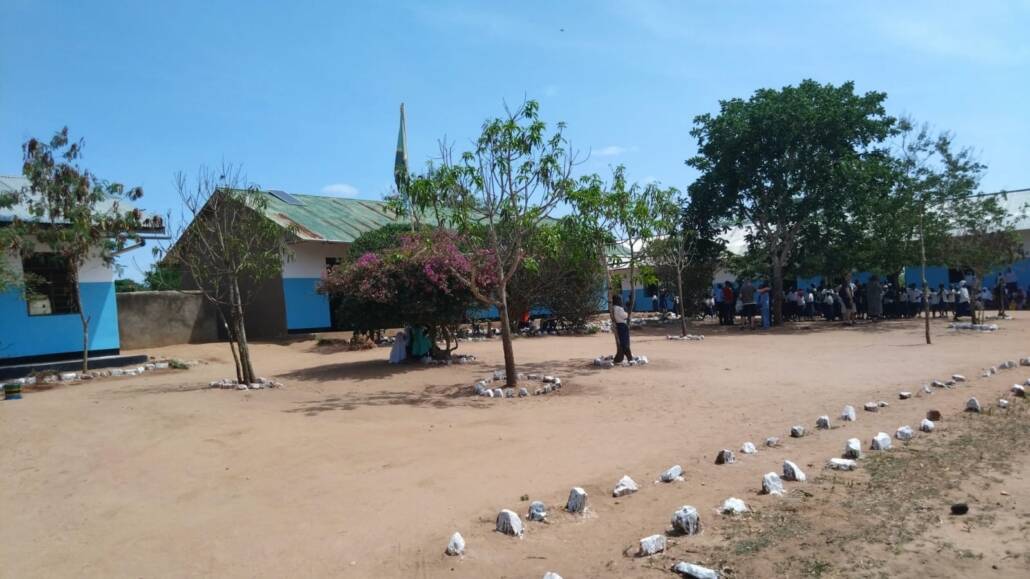
In October 2016, Maj-Britt and Kent Fager were back in Kwamadule. Thanks to the School of Naprapathy and my involvement, a furnished teacher's residence was now complete, along with an associated rainwater tank and a solar power system. The budget for the house itself was 72,500 SEK, and the School of Naprapathy was once again the main sponsor with 33,000 SEK, plus 12,500 SEK for the solar power system in the teacher's residence and schoolhouse. The remaining costs were sponsored by various Swedish friends. The number of children at the school was now 328, in preschool and grades 1–3. The school did not have room for all the children, so they also held classes outdoors. They had started building another schoolhouse, but the money ran out when they reached window height, which is why they appealed for support. “Future challenges include additional classrooms, more teachers, teacher housing, toilets, a health clinic, as well as an office, library, and kitchen for the school. But everything we have received for our village so far is a great miracle,” said the region's school administrator.
In October 2017, Maj-Britt and Kent Fager made another visit to follow up on the results of the donations from Sweden. Schoolhouse no. 2 with its associated water tank was complete! A big thank you and greetings were conveyed to the Swedish donors, the School of Naprapathy, which donated 62,000 SEK, and other Swedes who paid for the water tank with 30,000 SEK. 374 children were now attending the school from preschool through grade 4. All children received notebooks, pencils, and erasers, which were bought in the nearest town and cost about 1,200 SEK. Great joy. “You have brought light to our area” said the school official this time, expressing his and the villagers' deep gratitude.
In March 2018, we made another visit to see for ourselves the overall picture—how the school was functioning, being used, and managed. Naturally, we also wanted to see the development in the village.
The number of students had increased since the start in 2014, from 124 pupils to 484 at the time of this visit. Five teachers are employed, but more classrooms and teachers are needed. Shrubs, flowers, and trees have been planted around the school buildings to bind the soil and to make the outdoor environment pleasant and beautiful. Children from different social groups, tribes, and religious backgrounds attend the school. Collaboration with the municipality, the local community/villages, and the church contributes to positive development and good cooperation across boundaries. There are new visions for the future: more classrooms to complete the primary school, additional teacher housing, toilets, a dispensary, and even the hope that students will one day be able to attend secondary school.
In a conversation with the governor, it emerged that if I could arrange funding for another school building with two classrooms, it would mean that the Björn School would become a complete primary school. Furthermore, the Maasai students who met the academic requirements after completing primary school would then have the opportunity to study at a state secondary school. We reached that agreement, and the challenge was and is fantastic. Our Maasai students would be seriously given the opportunity to integrate into Tanzanian society—a development that aligns with our goals.
When I had the opportunity to speak during this visit, I also pledged funds for the construction of more toilets.
This was a special gift from the Berg family. The delight of the students and teachers was unmistakable. The applause spoke for itself.
This visit was made by me, Yvonne, and Jan-Willy Andersson, together with Maj-Britt and Kent Fager. Due to heavy rain, the road was difficult and quite impassable in some places, but our driver, Emmanuel Mhando, had rented a Toyota Land Cruiser for the day's adventure, so everything went well.
We were treated to singing, dancing, speeches, lunch, and a tour of the school buildings, teacher housing, and water tanks, as well as thank-you speeches from the ward councilor and other school officials. All the schoolchildren received notebooks and pens, which were purchased in Handeni for 1,200 SEK (300,000 TZS). Yvonne also bought 400 bananas, which were divided so that every child got their share. What a fruit break!
The promise made in March 2018 regarding funds for more toilets—three for girls and three for boys, plus a teacher's toilet in one single block—would, of course, be kept. On August 3, 2018, 27,250 SEK was sent for this purpose.
The number of students is increasing, and there is a need for more classrooms, which is only natural. The school was originally built for grades 1-2, and each year a new grade was added until all seven were in place.
The agreement with the governor was important. Thanks to a generous main sponsor and other donors, the construction of school building number 3 could begin in the autumn of 2018. Their wish was to build two classrooms and a staff room between them. Through dialogue and further calculations, we decided to help with the two classrooms so that all grade levels (1-7) could now have their own room. We opted out of the staff room and instead offered the teachers lockable cabinets in their classrooms. The estimated cost according to the budget from Kwamadule was approximately 88,000 SEK.

On October 1, 2019, we sent over 19,500 SEK for school furniture. The classrooms naturally needed desks and teacher cabinets.
School building no. 3 is finished, but about 50 seats are missing because the number of students has risen to 708 (as of January 2020). The plastic desks donated by World Vision in 2015 have collapsed. We received an estimated cost of 17,000 SEK for the needed desks. We have now sent over 20,000 SEK for this purpose.
The school desks are manufactured at a carpentry workshop in the town of Handeni and transported by truck. During the autumn of 2019, there was so much rain that it took several months before the desks were in place in the first classroom of school building 3. Roads are often flooded during heavy rains—like when we inaugurated the school in 2014 and had to walk, or in March 2018 when we visited Kwamadule again and an entire bridge had been washed away, forcing the car to drive out into the bush to get around. Therefore, transporting building materials and furniture can take time, which can also lead to increased costs.
Considering the school's location in this Maasai area, with all that entails regarding rainy seasons, poor roads, and prevailing cultural differences, this school project is remarkable in itself, given the development that has taken place in the area in such a short time! From no school at all in 2012 to a fully developed primary school, grades 1 through 7, with access to water, toilets, and teacher housing between 2013 and 2019. Absolutely incredible! Thanks to good collaboration, a generous main sponsor and other donors, modern communication, a responsible Tanzanian contact person, Kipojo, and experienced contact persons from Sweden, the Fagers, this has been possible.
At the time of writing, the responses have been characterized by great gratitude from both Kwamadule and the governor, the DC. No new requests have been raised; rather, there are stories about how well the school is functioning. It is a source of pride and has been showcased as a model school. We will, of course, continue to follow its development.