Naprapathy originated in the USA at the beginning of the last century and was introduced in Sweden in the late 1960s. Today, naprapaths are one of the largest professional groups in the Nordic region within manual medicine, and more than 1.5 million treatments are performed in Sweden alone each year. Naprapaths are a licensed professional group with a protected professional title and are thus part of the Swedish healthcare system.
The word naprapathy means "to correct the cause of suffering" and is a combination of the Czech "napravit," meaning to correct, and the Greek "pathos," meaning suffering.
A central concept in naprapathy is connective tissue. Naprapaths investigate which structure is causing the patient's symptoms and believe that function-related disorders and pain conditions in the musculoskeletal system can primarily be traced to shortening, tension, and scar tissue in the connective tissue, as well as the impact of these changes on muscles and nerves. Connective and supportive tissue is found throughout the body in the form of, for example, ligaments, tendons, fascia, joint capsules, discs, and joint cartilage.
Naprapaths specialize in diagnosing structural and functional neuromusculoskeletal disorders, treating and rehabilitating patients with such conditions, and differentiating pain caused by other factors. You can read more about how naprapaths make diagnoses here.
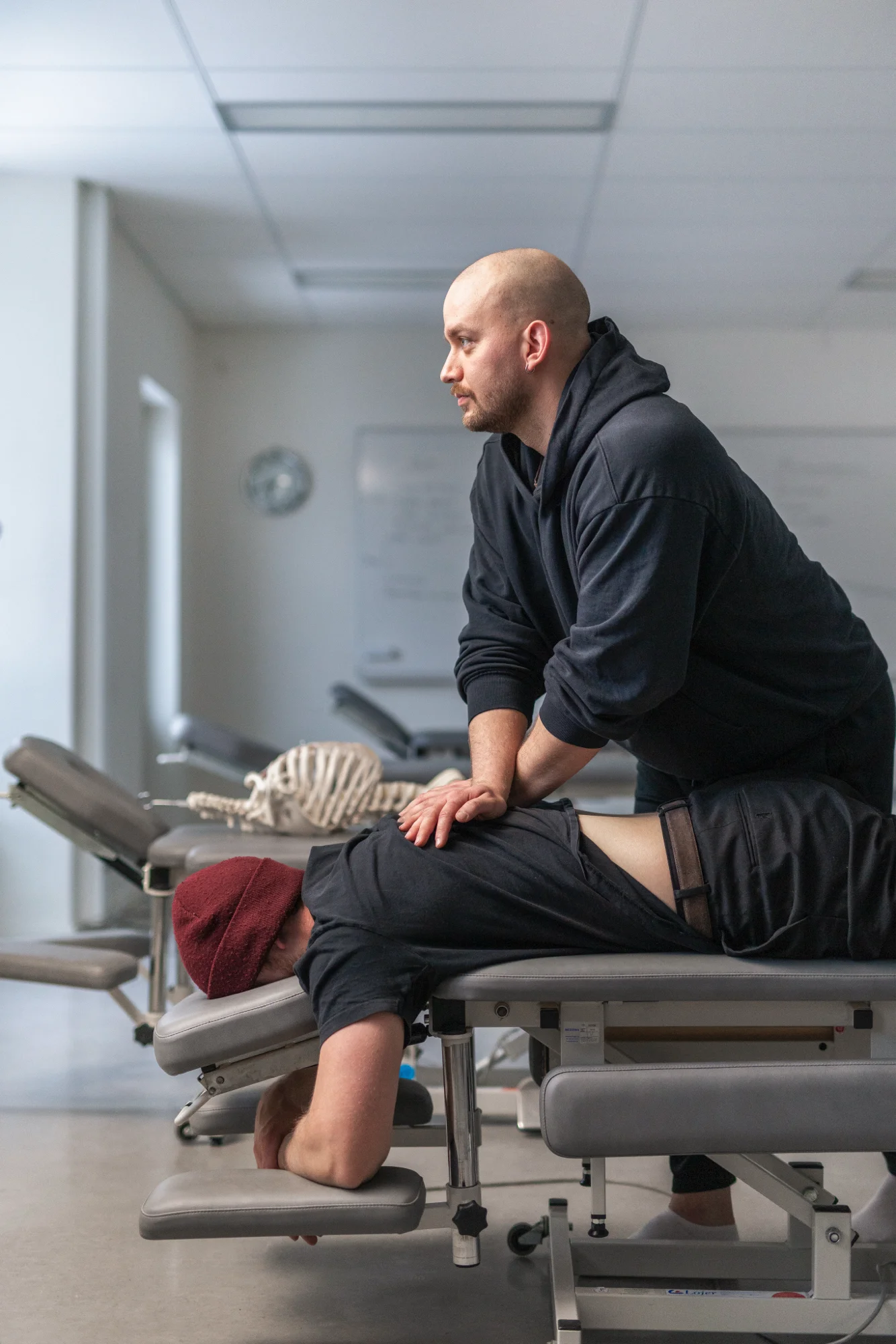
Naprapathic treatment involves the application of manual passive and active movements aimed at influencing connective and supportive tissue, muscles, and nerves to optimize function in the neuromusculoskeletal system and reduce pain. The fundamental treatment techniques used by the naprapath are "soft and connective tissue manipulation" (SCTM), which includes manipulation and mobilization techniques for the spine and other joints, as well as various types of soft tissue techniques such as massage, stretching, nerve mobilization, and more. Read more about how naprapaths treat patients under the heading Treatment methods.
Research in naprapathy, which has its roots in the early 20th century, showed that shortening and scar tissue in the ligaments, fascia, and muscles surrounding the spine lead to restricted movement and can affect spinal nerves, their branches, and consequently the connecting connective tissue, which in turn can impact neurological and circulatory function. A specific technique for treating these shortened structures and a system for mapping examination findings and treatment were developed as early as the beginning of the 20th century, which at the time was unique to naprapathy within the field of manual medicine. The purpose of the mapping was to document specific examination findings and the therapeutic treatment provided for various types of structural and functional changes in connective tissue; this represents the first medical record-keeping in naprapathy. Based on this specific and reliable mapping, the naprapath can restore neuromusculoskeletal function using specific manual techniques. You can read more about the research currently being conducted in naprapathy here.
The definition of naprapathy is taken from the book Naprapatins Grunder, Skillgate et al., Studentlitteratur, 1st ed., Lund 2011, ISBN 978-91-44-05408-7.
You can read more about naprapathy at 1177 Vårdguiden.
Since 1994, naprapaths in Sweden have been licensed by the National Board of Health and Welfare to treat patients with functional disorders and pain conditions in the musculoskeletal system. Naprapaths are therefore an integral part of the Swedish healthcare system. Naprapaths hold a protected professional title, are subject to the Health and Medical Services Act, and are under the supervision of the National Board of Health and Welfare. Licensure is granted after completing a naprapathic degree from the Naprapathic College and one year of supervised clinical practice within the Swedish healthcare system.
A licensed naprapath possesses the knowledge required to work under their own medical responsibility. This means that a naprapath can use examination and diagnosis to determine whether treatment should be initiated or if the patient should be referred to other healthcare services for further investigation.
You can read more about licensure & protected professional title for naprapaths here.
You can also read more about licensure and protected professional titles for naprapaths on the National Board of Health and Welfare's website, and about the naprapathic profession on the Swedish Public Employment Service's website.