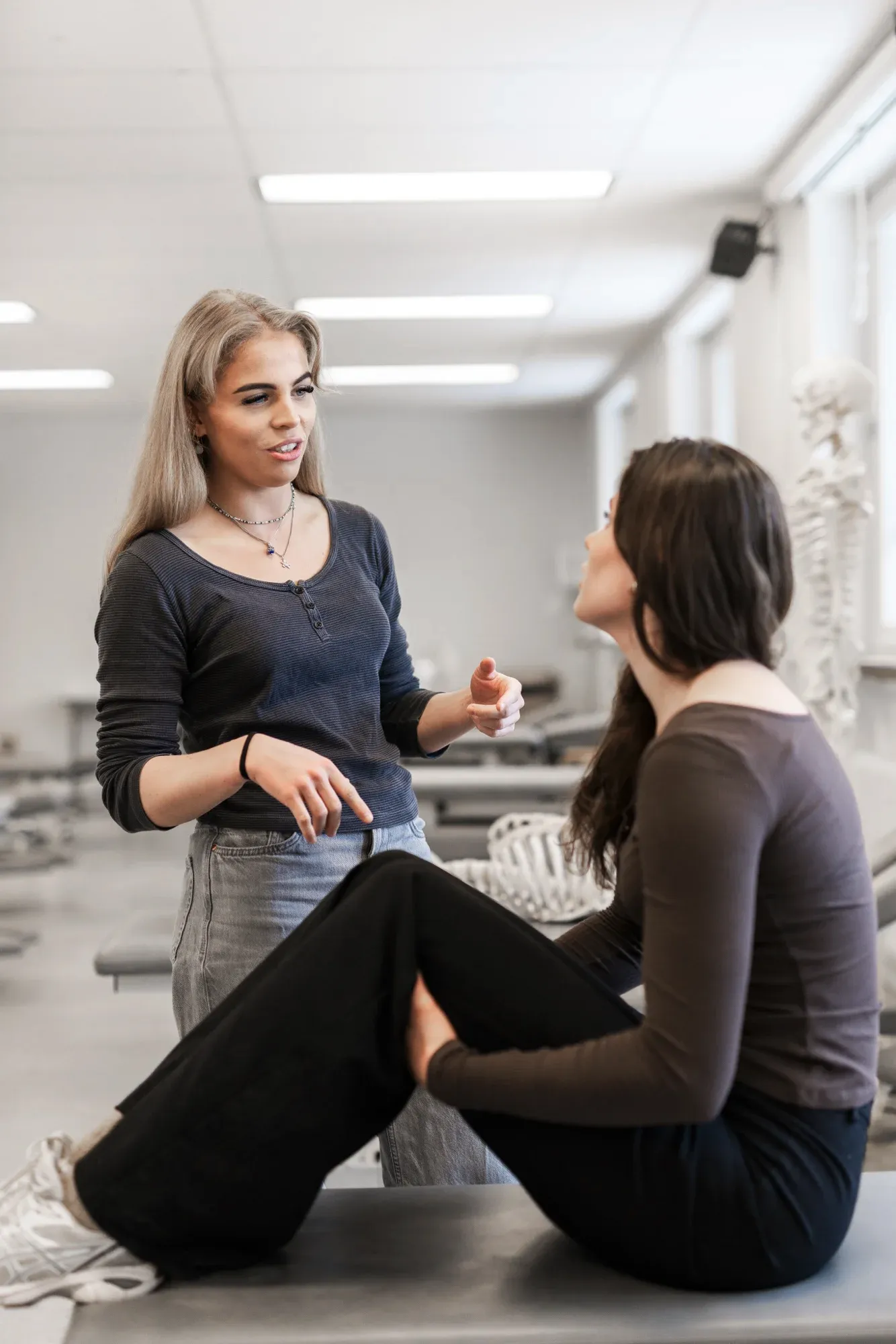
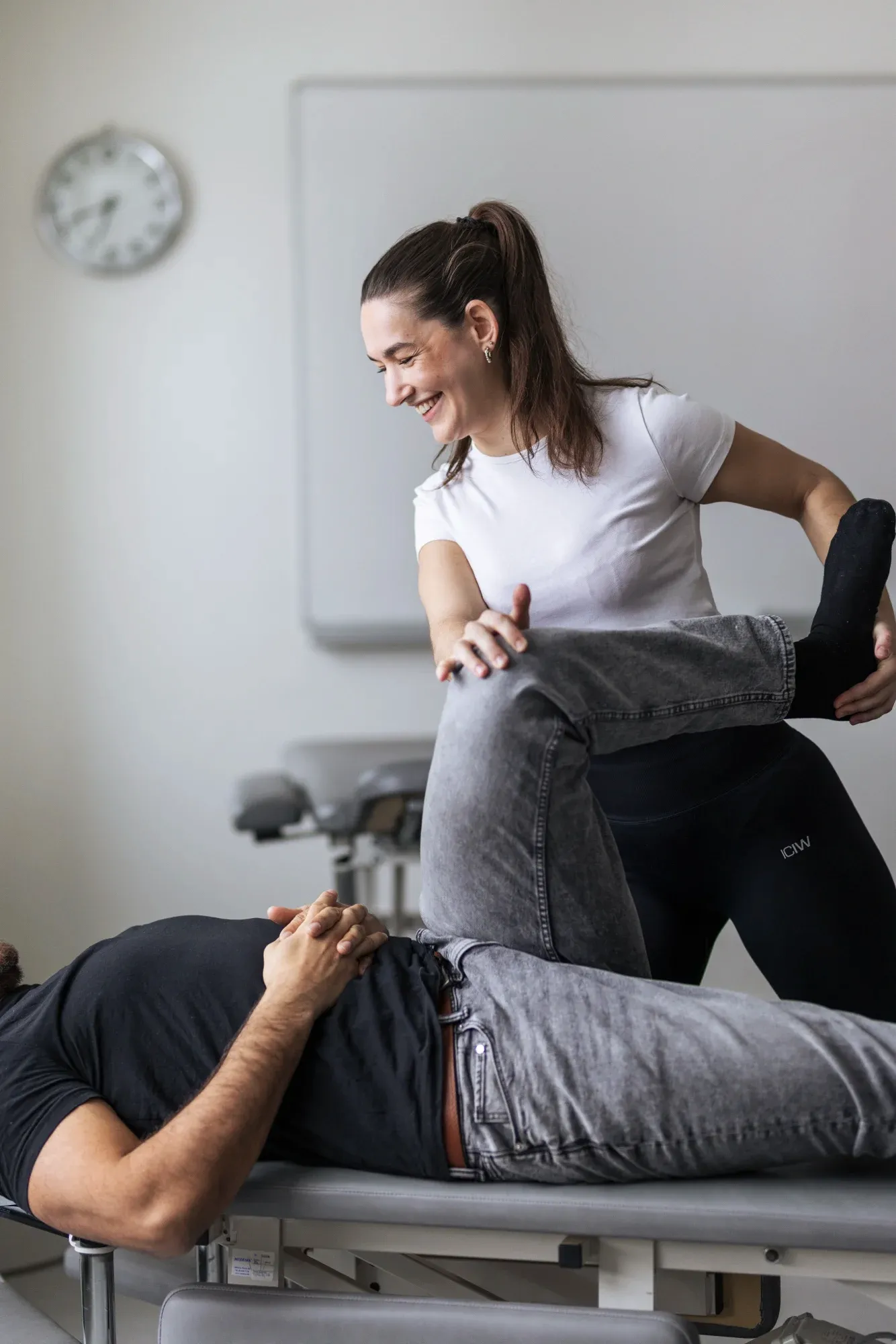
Naprapaths, chiropractors, and osteopaths are all specialized in examining, diagnosing, and treating musculoskeletal issues. They use a wide range of manual techniques—such as joint adjustment/manipulation, massage, trigger point therapy, dry needling, and customized rehabilitation. The focus is on supporting a person's return to health with treatment tailored to the patient's movement patterns, lifestyle, and needs.
The fourth year of the NIMM study programmes includes profession-specific specialization where:
Osteopathy students deepen their expertise in integrating structure, function, and a holistic perspective into person-centered care, while exploring a broad base of manual medicine techniques. Special emphasis is placed on clinical reasoning for complex and chronic conditions, the therapeutic alliance, shared decision-making, and the ability to justify osteopathic treatment within multimodal and interprofessional care.
Naprapathy students deepen their expertise in sports medicine and manual medicine, with a focus on preventing, diagnosing, treating, and rehabilitating injuries, pain, and functional issues related to physical activity, strain, and sports.
Chiropractic students deepen their expertise in the diagnosis and treatment of neck, back, and spine-related conditions, where evidence-based treatment skills, a biopsychosocial understanding, and the ability to coordinate care efforts are central.
At NIMM, we believe that the similarities are significantly greater than the differences, and that the existing differences primarily concern professional cultures that have developed over time, with different emphases in explanatory models and clinical focus.
However, it is important to be aware of certain differences related to how the three professions are regulated and how they are incorporated into healthcare systems, both in Sweden and internationally. In Sweden, both naprapaths and chiropractors are licensed professions, meaning they are subject to healthcare legislation and under the supervision of the National Board of Health and Welfare. Since 2006, "naprapath" has also been a protected professional title. Naprapathy has a particularly strong Nordic foundation and is largely built around the Swedish and Nordic healthcare tradition.
Chiropractic is represented at the European level by the European Chiropractors’ Union (ECU) and globally by the World Federation of Chiropractic (WFC), which has member organizations in 88 countries and has been a non-governmental organization in official relations with the World Health Organization (WHO) since 1997. Chiropractic is currently regulated in 20 European countries.
While osteopathy is not yet a licensed profession in Sweden, it is one of the most established manual medicine professions internationally. It is represented globally by the Osteopathic International Alliance (OIA), which has been in official relations with the WHO since 2018. There are approximately 89,000 registered osteopaths, and the profession is recognized as a healthcare profession in 16 countries, with a protected title and legal regulation in 15. Furthermore, there is a common European standard for osteopathic care, the CEN standard EN 16686, published in 33 European countries.