The School of Naprapathy closely monitors developments and information regarding the spread of Covid-19. We take the health and safety of our patients, students, and staff very seriously.
The same information was sent out yesterday to students, faculty/staff, and patients. The message is simple and clear.
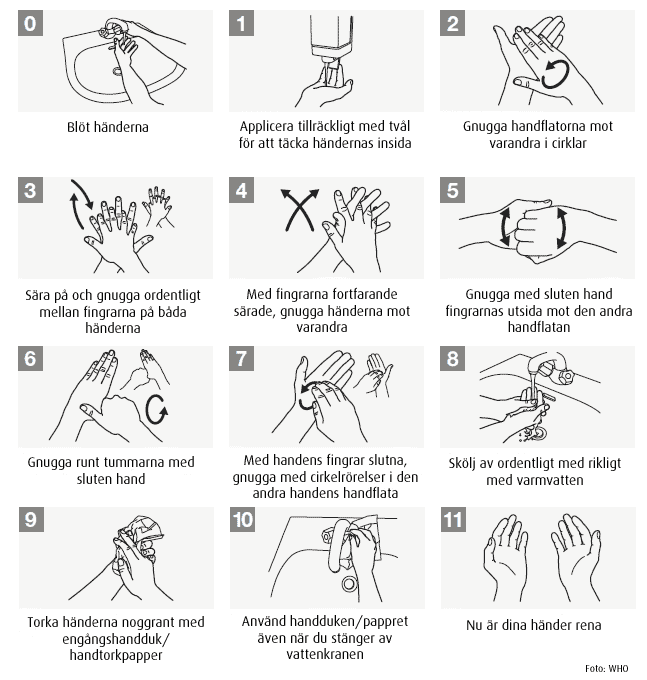
Covid-19, along with a range of other microorganisms, spreads through human contact or through coughing and sneezing—so-called contact, droplet, and aerosol transmission. The World Health Organization (WHO) and the U.S. Centers for Disease Control and Prevention recommend hand hygiene as the most cost-effective way to prevent the spread of infection. The Swedish Public Health Agency’s advice for avoiding infection is to avoid contact with sick people and to wash your hands with soap and water. We can conclude that washing your hands is important, but how do you actually do it correctly? Students who have taken the course in Infectious Diseases and Healthcare Hygiene have been taught and examined (!!!) on the procedure recommended by the WHO (please see the image below). If you wash your hands using this method, you can be sure to eliminate all infectious agents. Handwashing should take between 40 and 60 seconds.
Covid-19 belongs to a group of viruses, along with the norovirus, that lack an envelope and are known as "naked viruses." This means they are difficult to kill with standard alcohol-based hand sanitizers. Hand sanitizer containing hydrogen peroxide solution, which—unlike "regular hand sanitizer"—is also effective against naked viruses, can be a good way to significantly reduce the number of virus particles on our hands and thereby reduce the risk of infection.
At the School of Naprapathy, we adhere to the hygiene regulations defined by the National Board of Health and Welfare for all licensed healthcare professionals in Sweden.