Naprapathy, chiropractic and osteopathy are strong choices for 2027 if you want to work closely with patients and be free to choose between employment and running your own practice. WHO figures point to a growing need for care, and the insurance industry is reporting more treatments. At the same time, the hands-on work requires physical presence, a strength as AI transforms the labour market.
AI is already shaping young people's study choices. In Ungdomsbarometern's Generationsrapport 2026, 37 per cent say that technological change has made them rethink their study and career choices. Nearly seven in ten agree that AI could make it harder for their generation to get established in the labour market. The survey covers around 15,000 young people aged 15 to 24.
At the same time, healthcare education is attracting many applicants. Ahead of autumn 2026, the number of first-choice applicants rose by 18 per cent for physiotherapy, 11 per cent for nursing and 6 per cent for medicine, according to the Swedish Council for Higher Education (Universitets- och högskolerådet).
Are muscles, joints, pain and hands-on treatment what interest you most? Then manual medicine is worth a closer look.
According to the WHO, 619 million people were living with low back pain in 2020. By 2050 the number is expected to rise to 843 million, mainly because of a growing and ageing population. Low back pain is already the leading cause of disability worldwide. For someone in pain, it is about everyday life: being able to work, sleep, exercise or pick up their child.
Physical activity habits point the same way. The WHO estimates that 31 per cent of the world's adults did not reach recommended levels of physical activity in 2022, an increase of around five percentage points since 2010.
Patients may have sedentary office jobs, physically demanding work or a keen interest in training. What they have in common is that they want their bodies to work better.
The Swedish insurance market shows that demand is already turning into treatment. According to Insurance Sweden (Svensk Försäkring), the number of insurance-funded treatments in the physiotherapy and naprapathy category rose by 5 per cent in 2025, to just over 446,000. For 2024, too, the industry body reported an increase of 5 per cent on the previous year.
In the report Vårdförsäkring: varför och för vem? (Health insurance: why and for whom?), published in September 2026, physiotherapy, naprapathy and chiropractic together accounted for just over one in five treatments covered by health insurance in 2024.
‘It is clear that the need for care relating to joints, muscles and the skeleton remains high,’ says Eva Erlandsson, senior economist at Insurance Sweden.
If you are considering manual medicine, this means an established market, where both private individuals and employers pay for care through their insurance.
On NIMM's courses in naprapathy, chiropractic and osteopathy, you spend four years building integrated expertise in complaints of the muscles and joints and related complaints of the nervous system. Manual examination and treatment are central to your studies, alongside clinical assessment, exercise and rehabilitation. Supervised patient work begins as early as the first year.
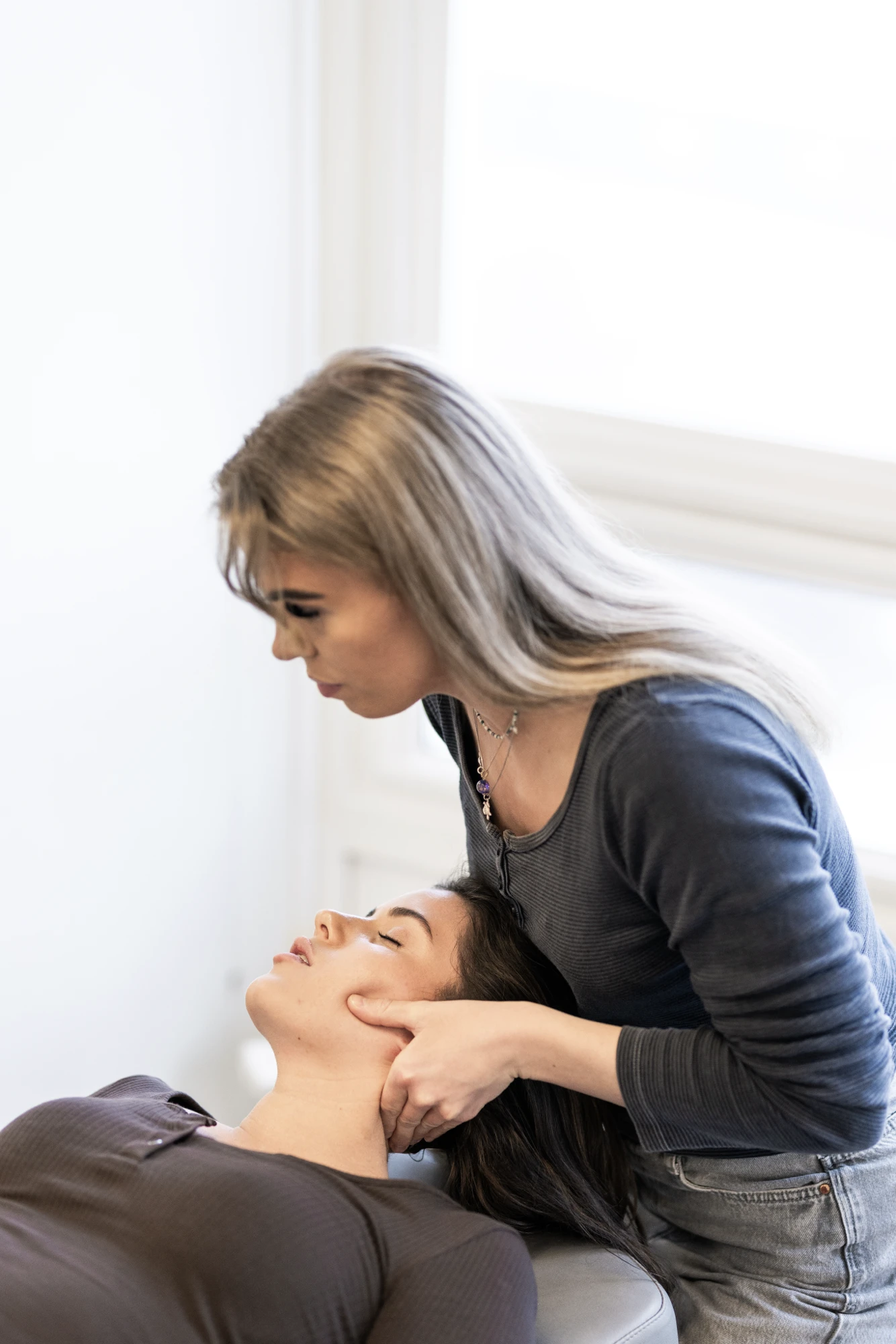
You practise examining how a joint moves, assessing function and using your hands with precision. You also learn to understand pain, weigh up treatment options and decide when a patient needs other care. This is an education for people who want to examine and treat patients themselves, with their own hands.
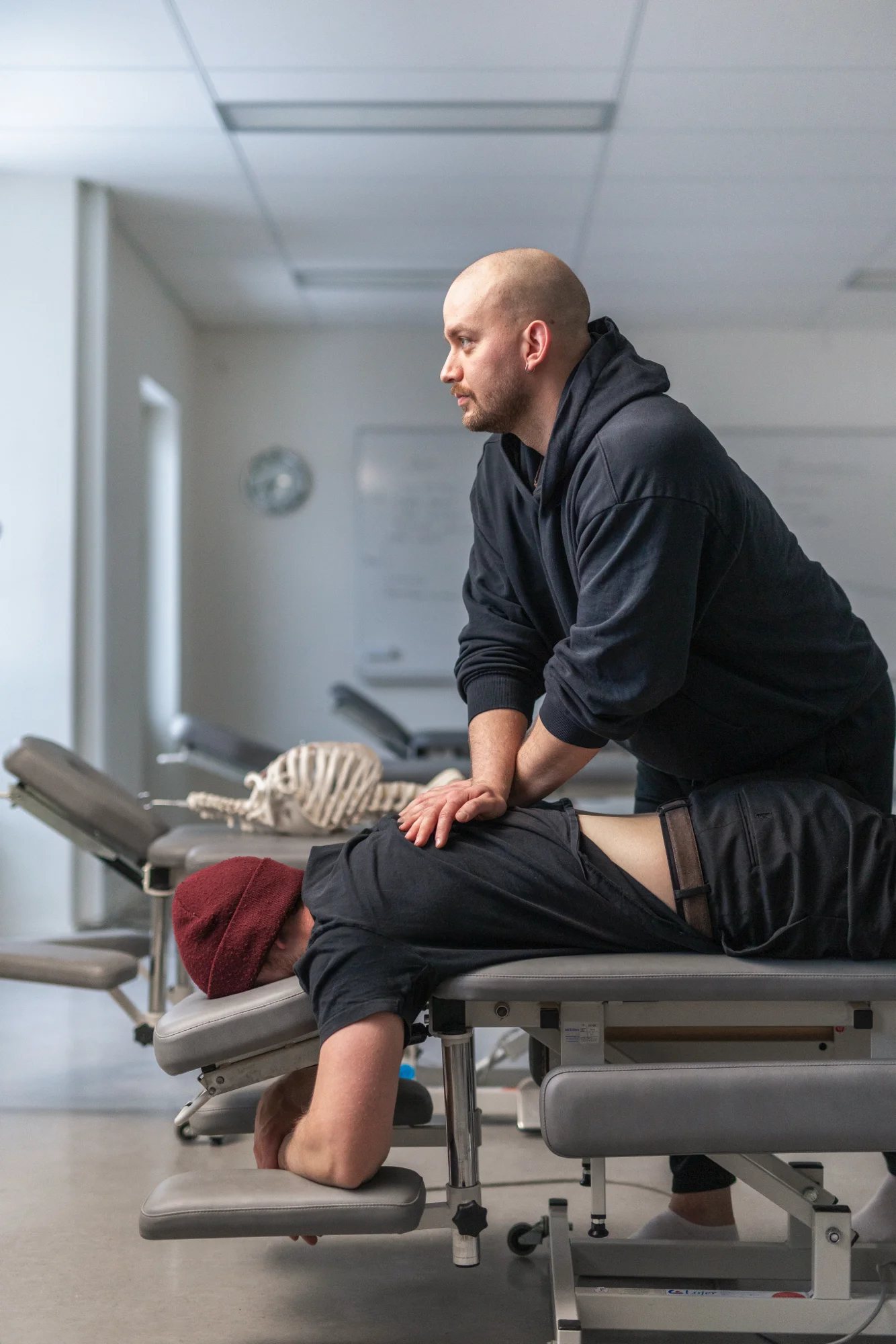
What sets NIMM's courses apart is that musculoskeletal conditions and manual medicine are the focus from day one. You have several years to develop your manual skills and clinical judgement in exactly this field. Patients' own efforts are also part of the work. The WHO guidelines on chronic primary low back pain highlight education, exercise and certain manual treatments, among other things, as part of care.
In a 2025 study, the International Labour Organization (ILO) estimates that around one in four jobs worldwide has some degree of exposure to generative AI. Its main conclusion is that changing tasks are more likely than whole occupations disappearing. The study also points to the limits when tasks require physical handling and manual dexterity.
In manual examination and treatment, you need to meet the patient in person, adapt your technique and feel how they respond. That work happens where the patient is. It cannot be moved abroad or turned into a digital service, as so many screen-based tasks can.
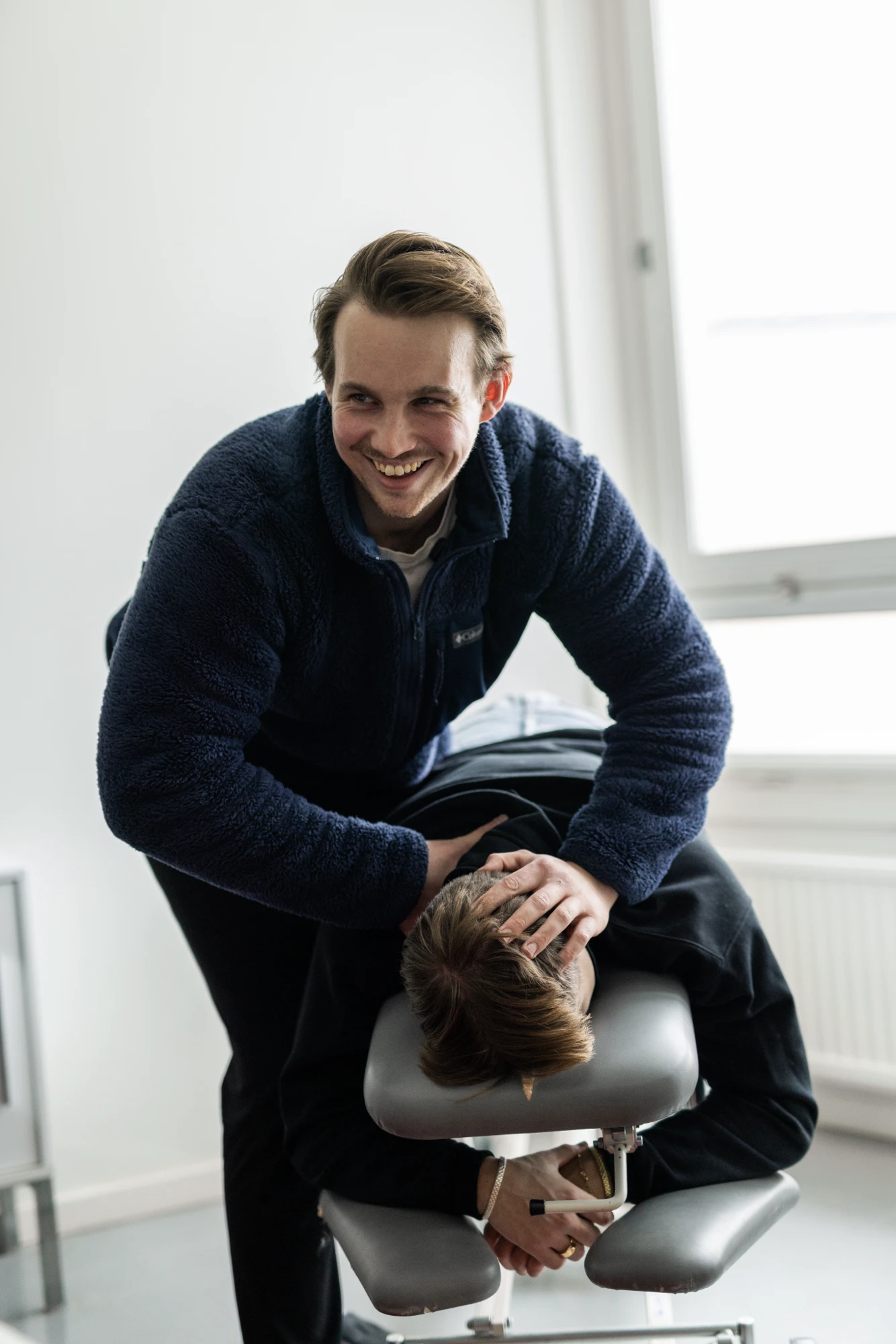
AI can become a valuable aid for tasks such as documentation and information searches. But examining and treating a person with your hands requires presence, skill and clinical responsibility. That suggests manual medicine is well placed as generative AI transforms the labour market. The professions will also evolve with the technology, and the ability to use it wisely will become part of professional skill.
Manual medicine offers both employment at clinics and opportunities to build your own practice. You can work in a team, rent space at a clinic or eventually run your own clinic. The sector also has a growing number of larger employers that hire many therapists in both Sweden and Norway.
Running your own business lets you shape your focus, partnerships and working hours. In a career profile by the Swedish Public Employment Service (Arbetsförmedlingen), chiropractor Malin Härlin describes working as a self-employed practitioner at a sports clinic. ‘I decide my own working hours, for example,’ she says. That freedom comes with the responsibility of building a patient base and running the business.
If you love sport, clinical work can be combined with roles in training and sports settings. Naprapath Johan Forsbring is one example. His professional background includes Djurgården Fotboll, the U21 national team and the Swedish support staff at the 2016 Rio Olympics. Today he is CEO of IntoMotion Sports Clinic and works alongside several healthcare professions. In a podcast interview from August 2026, he talks about his career path.
Roles like these are built on experience, further training and trust. Others find their niche helping recreational athletes, working people or older adults to function better in everyday life.
Naprapathy and chiropractic are licensed professions in both Sweden and Norway. Osteopathy is not a licensed profession in Sweden, but it is established and regulated in several other countries. In Denmark and Norway, licensure is required. The UK osteopathic register included more than 5,500 osteopaths, according to the oversight body, the Professional Standards Authority.
Whether osteopaths will be licensed in Sweden is an open question, and no decision has yet been made. If you choose osteopathy, the profession's international standing is a strength. If you want to work in another country, you will need to meet that country's education and qualification requirements.
NIMM in Stockholm brings together the School of Naprapathy, the School of Chiropractic and the School of Osteopathy. All three are four-year, full-time courses. The first three years share a common foundation, and the fourth year provides profession-specific specialisation. You combine medical studies with practical training and supervised patient work. That is how you develop your manual skills while learning to understand and justify your clinical decisions.
On the Naprapathy Course, you are trained in the examination, treatment and rehabilitation of musculoskeletal conditions. After graduating, you complete a year of prescribed practical service before you can apply for licensure from the Swedish National Board of Health and Welfare (Socialstyrelsen). In Norway, naprapathy has been a licensed profession since 2022. There you apply for licensure (autorisasjon) from the Norwegian Directorate of Health (Helsedirektoratet), which may require supervised practice for naprapaths trained in Sweden.
On the Chiropractic Course, you develop expertise in examination, clinical assessment and manual treatment of conditions of the musculoskeletal system. After graduating, you complete a year of prescribed practical service in Sweden or turnus in Norway. You then apply for licensure from Socialstyrelsen or from Helsedirektoratet in Norway.
On the Osteopathy Course, you develop manual and clinical skills with an osteopathic perspective on the body's structure and function and the person's life situation. The course leads to an Osteopathy Degree from NIMM. Osteopathy is not currently a licensed profession in Sweden. In Norway, osteopathy has been a licensed profession since 2022, but a Swedish education does not automatically lead to licensure: Helsedirektoratet requires at least one year of full-time work as an osteopath within the last ten years, or otherwise carries out an individual assessment.
The courses charge tuition fees. The Naprapathy Course and the Chiropractic Course are eligible for student finance from the Swedish Board of Student Finance (CSN) in Sweden and from the Norwegian State Educational Loan Fund (Lånekassen) in Norway. The Osteopathy Course is not currently eligible for student finance from CSN, and Norwegian students should check with Lånekassen what applies. Read the current terms for student finance and tuition fees when comparing the options.
Want to see what teaching looks like? Book Student for a day and meet students and teachers. You can also talk to our study guidance team about which course suits your interests and circumstances.
Applications for autumn 2027 are open. Places are allocated on a rolling basis.
In the event of any discrepancy between the language versions, the Swedish text shall prevail.